
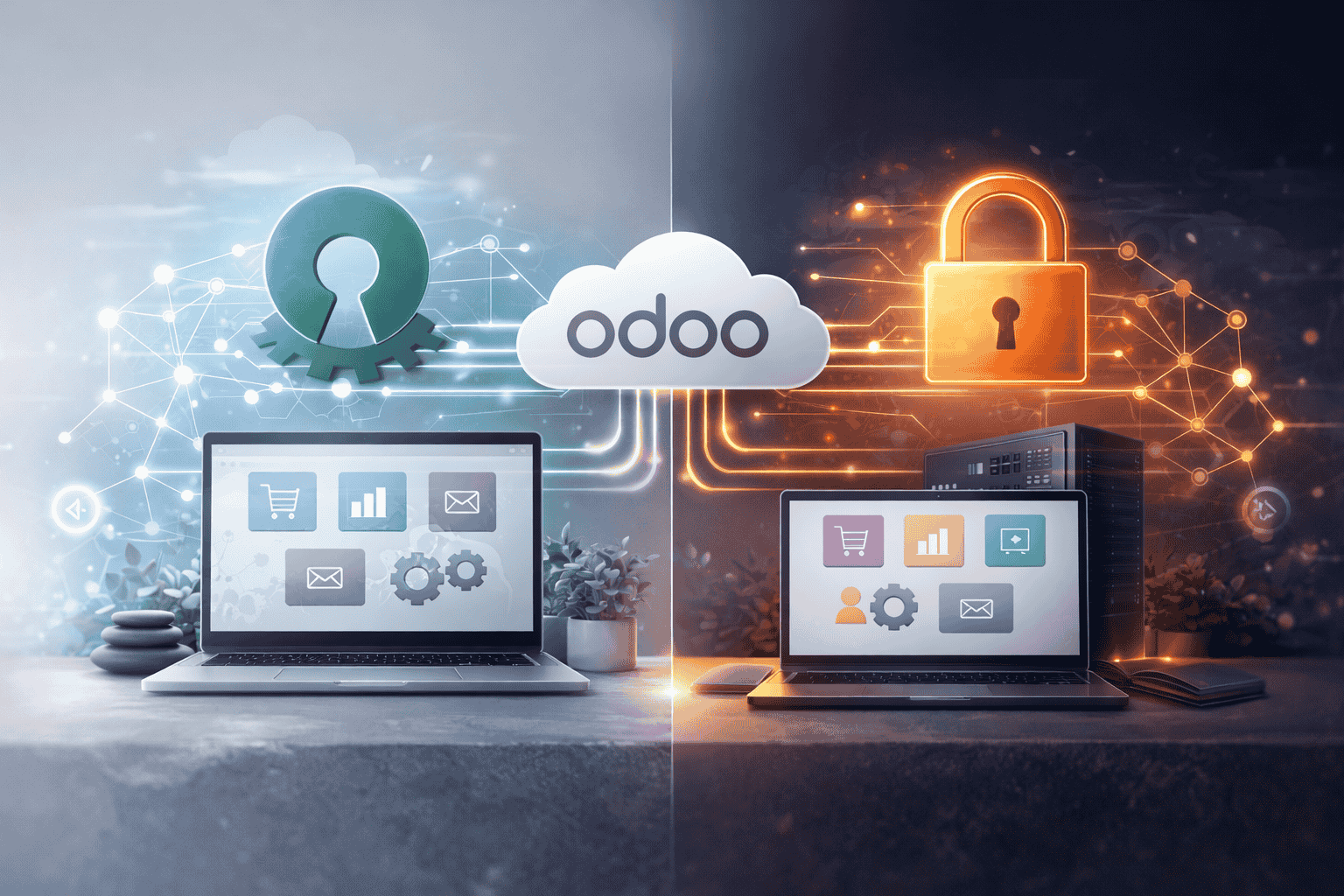
Enterprise Resource Planning (ERP) systems play a central role in managing business operations, integrating functions such as finance, inventory, sales, and human resources into a unified platform.
When selecting an ERP solution, businesses often face a fundamental choice: open-source or proprietary systems. Each approach offers distinct advantages and considerations, making it essential to evaluate them carefully.
This article explores the differences between open-source and proprietary ERP systems and examines where Odoo fits within this landscape.
Understanding Open-Source ERP
Open-source ERP systems provide access to their source code, allowing businesses to modify and customize the software according to their requirements.
Key Characteristics:
- High level of customization
- Greater flexibility
- Lower initial licensing costs
- Community-driven development
This approach is particularly suitable for organizations that require adaptability and control over their systems.
Understanding Proprietary ERP
Proprietary ERP systems are developed and maintained by vendors who retain full control over the software. Businesses typically pay licensing fees to use these systems.
Key Characteristics:
- Vendor-controlled environment
- Standardized features and updates
- Dedicated support services
- Limited customization compared to open-source solutions
These systems are often chosen by organizations seeking structured, out-of-the-box solutions with vendor-backed support.
Key Differences Between Open-Source and Proprietary ERP
1. Flexibility and Customization
Open-source ERP systems allow extensive customization, enabling businesses to tailor the solution to their unique processes. Proprietary systems, while configurable, often have limitations in terms of modification.
2. Cost Structure
Open-source solutions generally have lower upfront costs, as they do not require expensive licensing fees. Proprietary systems involve recurring licensing and maintenance costs, which can increase over time.
3. Control and Ownership
With open-source ERP, businesses have greater control over their system and data. Proprietary solutions rely heavily on the vendor for updates, changes, and long-term support.
4. Implementation and Maintenance
Open-source systems may require skilled technical resources for customization and maintenance. Proprietary systems often provide structured implementation processes and vendor support.
5. Scalability
Both open-source and proprietary systems can scale, but open-source solutions offer more flexibility to adapt as business needs evolve.
Where Odoo Stands
Odoo represents a unique position within the ERP ecosystem by combining the advantages of open-source flexibility with the structure of a comprehensive business management platform.
Key Strengths of Odoo:
1. Modular Architecture
Odoo offers a wide range of integrated applications, including CRM, accounting, inventory, manufacturing, and human resources. Businesses can start with specific modules and expand as needed.
2. Customization and Flexibility
As an open-source platform, Odoo allows businesses to customize workflows and features to align with their operational requirements.
3. Cost-Effectiveness
Compared to traditional proprietary ERP systems, Odoo provides a more affordable entry point while still offering enterprise-level capabilities.
4. Integrated Ecosystem
Odoo eliminates the need for multiple disconnected tools by providing a unified platform where all business functions are interconnected.
5. Scalability for Growing Businesses
Odoo supports businesses at different stages of growth, making it suitable for small, medium, and large enterprises.
Implementing Odoo Effectively with iCodeBees
While Odoo offers strong capabilities, its success depends on proper implementation and alignment with business processes.
This is where iCodeBees adds value. By understanding business requirements, customizing Odoo modules, ensuring seamless integration, and supporting user adoption, iCodeBees helps organizations fully utilize the platform and achieve operational efficiency without disruption.
Choosing the Right Approach
The choice between open-source and proprietary ERP depends on several factors, including:
- Business size and complexity
- Budget considerations
- Need for customization
- Availability of technical expertise
- Long-term scalability requirements
Organizations that prioritize flexibility and cost efficiency may benefit from open-source solutions like Odoo, while those seeking standardized systems with vendor-managed support may prefer proprietary options.
Conclusion
Selecting an ERP system is a strategic decision that impacts operational efficiency and long-term growth. Understanding the differences between open-source and proprietary systems helps businesses make informed choices.
Odoo stands out as a versatile solution that bridges the gap between flexibility and functionality, offering a scalable and integrated platform for modern business needs. With the support of experienced implementation partners like iCodeBees, businesses can further ensure a smooth transition and maximize the value of their ERP investment.
Call to Action
If you are evaluating ERP solutions and looking for a balance between flexibility, cost-effectiveness, and scalability, exploring Odoo can be a valuable step toward optimizing your business operations.

